Chapter 4
The exhibition games
 |
| Photo from www.shreveportnews.com (also http://baseballzen9.wordpress.com/) |
The Babe, Yankees came to town
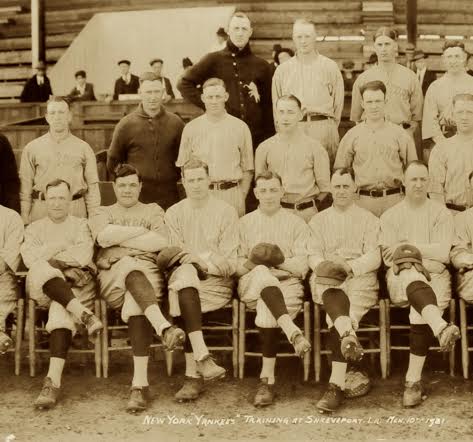
Babe Ruth and the New York Yankees made Shreveport their spring training home in March 1921. It might have been a good omen.
Ruth already was the biggest name in baseball, having hit an incredible 54 home runs in 1920, his first year with the Yankees. (He had hit a record 29 for the Boston Red Sox in 1919).
But the Yankees were not yet the game's premier team. Having warmed up in Shreveport in the spring -- and reportedly the rowdy Ruth and his teammates had the run of the city at night -- the 1921 season was historic for them.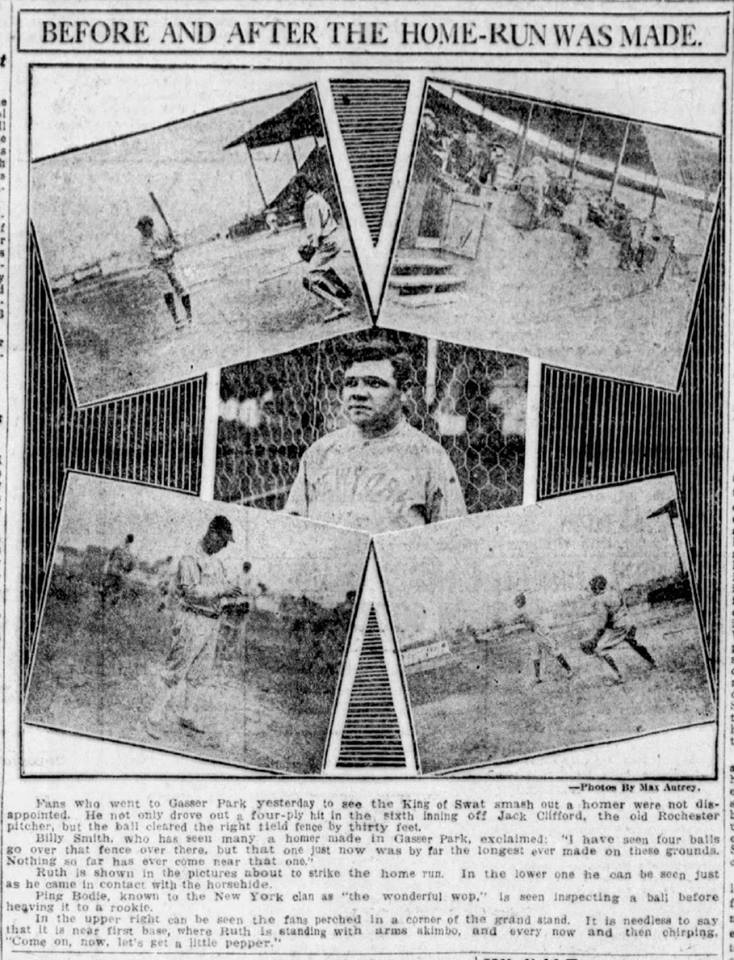
Ruth already was the biggest name in baseball, having hit an incredible 54 home runs in 1920, his first year with the Yankees. (He had hit a record 29 for the Boston Red Sox in 1919).
But the Yankees were not yet the game's premier team. Having warmed up in Shreveport in the spring -- and reportedly the rowdy Ruth and his teammates had the run of the city at night -- the 1921 season was historic for them.
One day Ruth hit a monster home run out of Gasser Park; Shreveport Gassers manager Billy Smith said he'd never seen a ball hit farther.

In the Yankees’ second exhibition game of the spring, March 12, the Babe hit three home runs -- to go with three singles and two stolen bases -- in a 21-3 rout of Shreveport.
That season Ruth hit 59 home runs, and the Yankees won the first of their record 40 American League championships.
Before major-league teams settled on Florida and Arizona -- with their more moderate spring weather -- for spring-training sites, many teams from 1903 to 1928 used Louisiana cities for their training camps.
Shreveport was one of those cities. Other than the 1921 Yankees, teams that had spring training there: Detroit 1903-04, Philadelphia Athletics 1905, St. Louis Browns 1908 and 1918, Cincinnati Redlegs 1916-17, Chicago White Sox 1925-28.
And, Shreveport, through the decades, was a frequent stop for teams to play exhibition games as they broke camp and headed for their regular-season openers. Plus, the Texas Rangers (1974) and San Francisco Giants (1989, 1992) came in for exhibition games during their regular seasons.
---
Exhibition game highlights (1940-97...)
1940:
April 8 -- St. Louis Cardinals 9, Shreveport Sports 5. Terry Moore hit a three-run homer for the Cards in the first inning, and Enos Slaughter (2-for-5) drove in three runs. Benson "Lefty" Brillheart, the Sports' Opening Day pitcher, went five innings and took the loss. Attendance: 4,500.
1941:
April 1 -- Brooklyn Dodgers 9, Sports 3. It was only 4-3 until the ninth inning when the Dodgers scored five. This was the Brooklyn team, managed by Leo Durocher, that won the franchise's first National League pennant since 1920. Joe "Ducky" Medwick went 3-for-4 with two doubles, a home run and three RBI; shortstop Pee Wee Reese went 2-for-3; and Ed Head, from North Louisiana, pitched seven innings. One Dodgers prospect was 21-year-old outfielder Pete Reiser. Attendance: 3,500.
April 7 -- St. Louis Cardinals 14, Sports 0. Enos Slaughter went 4-for-5, all doubles; lanky shortstop Marty Marion also went 4-for-5 and starred in the field; Ernie Koy hit a home run; and Johnny Mize went 3-for-6, with a home run, double and four RBI. Attendance was not in the game story.
1942:
April 4 -- Cleveland Indians 12, Sports 10 (8 innings). Future Hall of Fame shortstop Lou Boudreau, at age 25, was in his first year as the Cleveland manager. Ken Keltner, whose two defensive gems at third base helped stop Joe DiMaggio's 56-game hitting streak the previous season, hit a home run, and first baseman Les Fleming, who hit a Southern Association-record .414 for Nashville in '41 and would star for Shreveport near the end of his career in 1955, went 3-for-5. Attendance: 1,000-plus.
1946:
April 5 -- Pittsburgh Pirates 5, Chicago White Sox 1. As Shreveport prepared to resume Texas League baseball after a three-year World War II hiatus, the first post-war major-league exhibition game at Texas League Park drew 5,500-plus.
The White Sox roster was loaded with ex-Shreveport Sports players, among them pitchers Ralph "Bruz" Hamner, Doyle Lade and Eddie Lopat, infielder Bob Kennedy and outfielders Dave Philley and Guy Cutright.
The Pirates were managed by Frankie Frisch, and had some familiar baseball names: pitchers Truett "Rip" Sewell (blooper pitch fame) and Edwin "Preacher" Roe, catcher Al Lopez, infielder Babe Dahlgren and outfielder Al Gionfriddo. But the Pirates' biggest star was a coach, "The Flying Dutchman," Honus Wagner.
1947:
April 7 -- Chicago White Sox 5, Shreveport Sports 2 (called after seven innings, rain). Right fielder Bob Kennedy of the White Sox, an ex-Sports player, was the only player in the game with more than one hit, and he had a double and RBI. Gordon Maltzberger, star of the 1942 Sports' pennant-winning playoffs, pitched the last inning for Chicago. Attendance: 1,000.
April 9 -- Chicago Cubs 7, Sports 0. Emil Kush pitched the first four innings for the Cubs, giving up one hit. Doyle Lade, Sports' star in 1942 and the previous season, returned to pitch the last five innings (giving up three hits) for the Cubs. Bob Scheffing hit a two-run triple and Andy Pafko homered. No attendance listed in the game story.
1949:
April 8 -- Cleveland Indians 2, New York Giants 0. The attendance was a stadium-record 10,351 -- and the overhead photo of that overflow crowd is the classic shot of Texas League Park/SPAR Stadium. The Indians were defending World Series champions and their center fielder Larry Doby -- the American League's first African-American player two years earlier -- became the first to play in an integrated baseball game in Shreveport. The second Cleveland run was a home run by right fielder Allie Clark. Bob Lemon pitched a three-hitter in the first seven innings for the Indians.
April 9 -- Chicago White Sox 9, Sports 4. Hal Simpson's home run helped give Shreveport an early 4-0 lead, but the White Sox rallied as catcher Don Wheeler had four hits, including a triple, and four RBI, and Gus Zernial had three hits, one a home run. Attendance: 1,325.
April 10 -- White Sox 5, Sports 4. Shreveport again led 4-0, until the White Sox scored two in the eighth and three in the ninth. Ex-Sports player Dave Philley hit a home run for the White Sox. Attendance: 2,212.
1950:
April 5 -- Sports 8, Philadelphia Phillies 2. Shreveport beat the team that would become known as the "Whiz Kids" that season and win the National League pennant. Outfielders Pete Lewis (two doubles) and Bill White (3-for-5, double) led the Sports. Phillies' ace Robin Roberts pitched three innings in relief; first baseman Eddie Waitkus, shot by a deranged female fan in a Chicago hotel room the previous summer, received a big welcome when he batted early in the game. No attendance listed in the game story.
April 6 -- Philadelphia Phillies 7, Sports 4. Del Ennis hit a three-run homer, Eddie Waitkus had three hits (two doubles) and lefty pitching ace Curt Simmons went six innings on a chilly night, giving up one run and three hits. Attendance: 2,140.
April 7 -- Cleveland Indians 16, New York Giants 12. Another large crowd watched Cleveland build a 15-0 lead as second baseman Joe Gordon hit a three-run homer and a grand slam, and catcher Ray Murray also hit a grand slam, Bob Feller pitched six innings for the Indians; Sal Maglie was one of the Giants' relievers. The Giants scored seven in the ninth to make it look close. Attendance: 8,421.
April 8 -- Chicago Cubs 12, Sports 4. Hank Sauer's three-run homer sparked the Cubs' rout on a Saturday night. Attendance: 2,009.
April 9 -- Chicago Cubs 7, Sports 5. On Easter Sunday, Roy Smalley's leadoff home run in the top of the eighth broke a 5-5 tie. The winning pitcher, although he walked seven in four innings of relief, was Johnny Vander Meer of double no-hitter fame. Attendance: 2,053.
1951:
The only major-league exhibition schedule -- Boston Braves vs. Chicago White Sox on April 5 -- was rained out.
1952:
April 1 -- Boston Red Sox 4, Sports 2. Home runs by Don Lenhardt and Vern Stephens led Boston, but Ted Williams wasn't there, having enlisted in the military for the Korean conflict. No attendance listed in the game story.
April 7 -- Chicago Cubs 8, St. Louis Browns 6. A battle of two last-place teams in the previous season. The Cubs rocked Browns ace Ned Garver, a 20-game winner in 1951, for seven runs in the fourth inning. Attendance: 1,767.
April 9 -- Cleveland Indians 2, New York Giants 1. Cleveland had only three hits, but one was a two-run single by veteran catcher Birdie Tebbetts in the fifth inning. The Giants had nine hits, but scored only on catcher Wes Westrum's home run, and left 12 men on base. Knuckleballer Hoyt Wilhelm pitched three innings in relief for the Giants. Two Giants outfield stars missed the game: Willie Mays was at home in Alabama making an appeal to his military draft board; Monte Irvin had a broken ankle. Attendance: 7,599.
1953:
July 17 -- The Texas League All-Star Game was played in Shreveport for the first time, and the format was players from the North (Fort Worth, Dallas, Oklahoma City, Tulsa) vs. the South (Shreveport, San Antonio, Houston, Beaumont). The North won 6-1; the attendance at Texas League Park was 7,686.
1954:
Four major-league exhibition games -- six teams involved -- were scheduled in a week's time at Texas League Park, and they marked the return of eight ex-Shreveport players: pitchers Warren Hacker and Jim Willis (Chicago Cubs), shortstop Chico Garcia (Baltimore), outfielder Dave Philley (Cleveland), infielder Bob Kennedy (Cleveland), first baseman Earl York (Chicago White Sox), catcher Bill Sarni and outfielder Harry Elliott (St. Louis Cardinals).
March 31 -- Baltimore Orioles (their first year after the franchise shift of the St. Louis Brown) vs. the Cubs. Rained out. It postponed by a day the first game with Stan Hack as Cubs' manager; he had replaced Phil Cavaretta two days earlier.
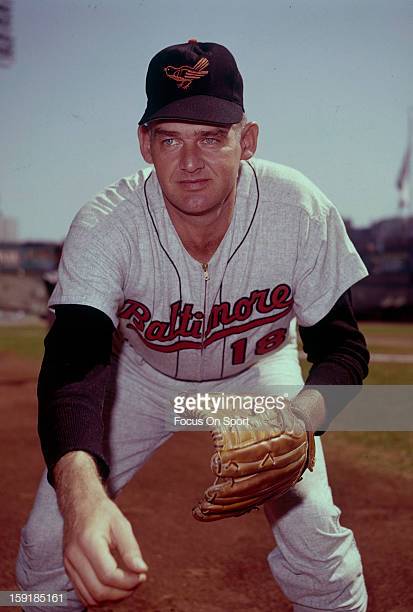 April 1 -- Orioles 6, Cubs 1. Outfielder Vic Wertz led the Baltimore offense with three hits, and the final Orioles pitcher (two innings) was Don Larsen (left). The Orioles lineup included North Louisiana resident (and future Shreveport manager) Clint Courtney as catcher and late-game sub first baseman Ed Mickelson (who would star for the Shreveport Sports that season). Significant names in the Cubs' lineup: rookie shortstop Ernie Banks, perennial All-Star outfielder Ralph Kiner, outfielder Hank Sauer (1952 National League MVP) and ninth-inning pinch-hitter Joe Garagiola (hit into a double play). Attendance: 1,832.
April 5 -- Cleveland 10, New York Giants 8. This would be the World Series matchup in the fall, and the teams were on their usual trip north from training camps in Arizona. Catcher Jim Hegan's three-run homer was the game-winner in the bottom of the ninth -- years later, it would be known as a "walkoff." Attendance: 4,215.
April 6 -- Cardinals 9, White Sox 2. One highlight -- Stan Musial hit a home run for the Cardinals. The White Sox's lineup included second baseman John Lipon (the Shreveport Captains' manager in 1976-start of '77) and catcher Carl Sawatski (two decades later the Texas League president). Attendance: 5,000-plus.
1956:
April 9 -- Cleveland Indians 6, New York Giants 4. Jim Hegan, whose home run had won the teams' 1954 meeting in Shreveport, hit another homer, but the story of the rainy-day game was the Cleveland pitching combination. Left-handed sensation Herb Score went the first five innings (three hits, one run); Hall of Fame right-hander Bob Feller, in his last season, worked the last four, beginning with a strikeout of Willie Mays. Attendance: 5,404.
1967:
April 8 -- Cleveland Indians 8, Cincinnati Reds 5. Shreveport had been without pro baseball since the 1961 season, and the first spring exhibition game at the ballpark since 1956 drew an overflow crowd of 8,750, with the overflow down the left- and right-field foul areas roped off from the playing field.
Rocky Colavito hit a home run for Cleveland, managed by North Louisiana resident Joe Adcock, and Max Alvis, from Jasper in East Texas, played third base. The Reds' lineup included Pete Rose in left field and Tony Perez -- who hit a home run -- at first base.
1968
April 6 -- Cincinnati Reds 6, Oakland Athletics 5: Shreveport was back in Organized Baseball, as the Atlanta Braves' Class AA farm team, and the stadium -- now known as Braves Field -- had received a makeover. It was the Athletics' first season in Oakland as owner Charlie Finley moved the team from Kansas City.
The Athletics' lineup included outfielders Reggie Jackson (who hit two home runs) and Rick Monday, shortstop Bert Campaneris and rookie third baseman Sal Bando (who hit a home run).
The Reds' lineup included Tony Perez at third base and Vada Pinson in center field. But Pete Rose did not play, nor did rookie catcher Johnny Bench. Don Pavletich, Bench's backup, hit a two-run homer and delivered the decisive run with an eighth-inning sacrifice fly.
The Oakland manager was Bob Kennedy, who 30 years earlier had played third base for the Shreveport Sports.
But the day's biggest attraction was an Oakland coach -- Joe DiMaggio.
Attendance: 3,339
1969:
April 2 -- San Francisco Giants 9, Cleveland Indians 2: The first meeting in Shreveport for this old spring "barnstorming" rivalry was a seven-inning game before an estimated crowd of 6,000.
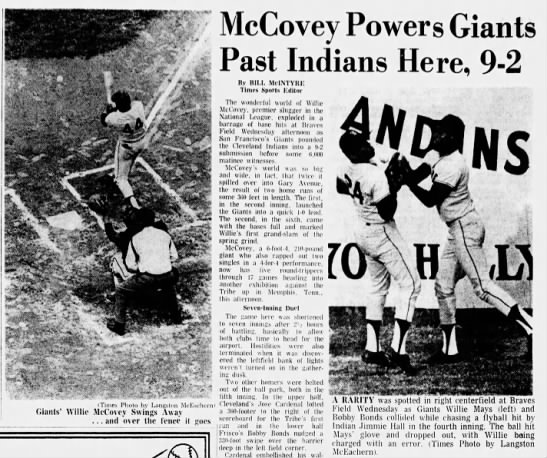 Two future Hall of Fame players played key roles for the Giants: Willie McCovey hit two home runs, one a grand slam, and Gaylord Perry was the winning pitcher. But the biggest Hall of Fame name in the game for the Giants was Willie Mays in center field, and another star in the outfield was Bobby Bonds (who hit a home run).
The Cleveland manager, just as two years earlier, had Louisiana ties -- Alvin Dark (Lake Charles and LSU football/baseball star), who earlier in the decade (1962) had been the Giants' National League pennant-winning
manager.
 |
| Willie Mays played exhibition games in Shreveport, the last one in 1969 when the San Francisco Giants faced Cleveland, then he returned as a Giants’ roving coach on July 28, 1986, and signed autographs, too, this one for then-KTAL-TV (Channel 6) sports director Darrell Rebouche. (photo from Texas League office files) |
1974:
Aug. 15 -- The Texas Rangers stopped in at SPAR Stadium as the opponent for the Texas League All-Star Game, Shreveport's first since 1953.
The Rangers, with Billy Martin in the first full season as their manager (they had a 60-60 record at the time), were between the end of a homestand and a road swing that would begin in Cleveland.
It was a huge attraction; the crowd of 4,487 was the largest in a decade in Shreveport.
The TL All-Stars beat the Rangers 10-5, and Martin made an exhibition of the game. At age 46, he entered the game at second base in the seventh inning -- and made two errors.
A Texas coach, 49-year-old Charlie Silvera, was a pinch-runner, and Duke Sims played seven positions for the Rangers, pitching the eighth inning. Pitching phenom David Clyde, 19, worked two innings and threw mostly curveballs.
The All-Stars were led by Jerry Mumphrey (3-for-5, three runs) and El Paso's Mike Miley -- a high school star in New Orleans and onetime LSU quarterback and shortstop -- had two hits.
1986:
July 9 -- Texas League All-Star Game, in the first season at Fair Grounds Field: East Division 4, West Division 3. Greg Litton of the Shreveport Captains, who had been 0-for-3 with two strikeouts, drove in the decisive run with a ground single up the middle in the bottom of the eighth inning. That capped a two-run rally by the East, which had lost a 2-0 lead when the West scored three runs off George Ferran (10-0 record for the Captains to that point).
Two other Captains were among the five pitchers for the East: Charlie Corbell started and was relieved by Jeff Brantley.
The game's MVP was center fielder Lance Johnson of Arkansas (three singles, two stolen bases, one run).
Attendance: 4,579
1989:
June 1 -- Shreveport Captains 4, San Francisco Giants 3. It was the first time the Giants, in their 11th season of a 24-year period as Shreveport's "parent" team, came to Fair Grounds Field. They were leading the National League West (and went on to win it, then the NL Championship Series and play in the earthquake World Series).
Rich Aldrete's two-run homer in the eighth inning won it for Shreveport. He hit it against then-Class A pitcher Steve Reed (later a Captains' pitcher and longtime major-league reliever).
One-time Captains playing for San Francisco included Terry Mulholland, who pitched the first three innings, and Don Robinson, normally a starting pitcher who filled in as a designated hitter and hit a two-run homer.
Attendance: 7,958.
1992:
June 11 -- Shreveport Captains 2, San Francisco Giants 1: The parent team returned for another game at Fair Grounds Field, but the Captains won again as Rick Huisman pitched 6⅔ strong innings and Clay Bellinger's sacrifice fly delivered the decisive run.
Among the Giants (including several ex-Captains) returning to Shreveport: Scott Garrelts, an off-season resident, pitched the first three innings for San Francisco, his first outing in nearly a year following elbow surgery; hitting coach Dusty Baker, a Shreveport Braves' outfielder at age 19 in 1969; and third-base coach Wendell Kim, manager of the Captains in 1986, their first season at FGF.
Attendance: 7,725.
1995:
July 10 -- Class AA All-Star Game: American League-based team 3, National League 1. Shreveport bid on the game bringing together stars from the Texas, Southern and Eastern Leagues (a total of 28 teams), and the game drew an overflow crowd of 6,247 to Fair Grounds Field on a Monday night.
One main reason: The presence of second baseman Todd Walker, the ex-Airline High and LSU star who was in his second pro season and a member of the AL team because he was playing for the Minnesota Twins' Class AA farm team (New Britain, Conn.). Walker, who had played high school ball and for LSU at the stadium, was 0-for-1 with a walk.
Four Shreveport Captains, as San Francisco Giants' minor leaguers, were on the National League team: pitcher Steve Bourgeois, outfielders Jacob Cruz and Keith Williams, and third baseman Bill Mueller.
Top names in the game: AL -- outfielder Johnny Damon and shortstop Nomar Garciaparra; NL -- catcher Jason Kendall, outfielders Jermaine Dye and Jay Payton, pitcher Paul Wilson.
MVP: Pork Chop Pough (given name Clyde Clay Pough), the Trenton (Boston Red Sox) first baseman who hit a first-inning home run, had two hits and scored a run in leading the AL team to a 3-1 victory.
1997:
July 30 -- Texas League All-Star Game: East Division 3, West Division 1.
Shreveport Captains' left-hander Troy Brohawn was the East's starting pitcher, worked two innings, and was the winner. Captains closer Bob Howry got the save with a 1-2-3 ninth inning.
MVP: Tulsa designated hitter Dan Collier's two-run single highlighted the East's four-run first inning, and was all it needed.
Attendance: 3,173.


