Showing posts with label Irving Zeidman. Show all posts

Monday, July 15, 2019

That's the old ballgame Shreveport, chapter 26 -- the contributors

     Chapter 26 
The contributors
     TAYLOR MOORE --
The Captains' front-office team for much of the late 1980s/early 1990s:
(from left) Taylor Moore, president-general managing partner; Jon
Long, general manager; Elizabeth Denham, assistant GM.


The “Mr. Baseball” title, Shreveport version, was taken (Bonneau Peters), but the Texas League Hall of Fame honor Moore received in 2014 was well-earned. For almost a quarter century (1976 to 2000), he was the Shreveport Captains’ team president and operating partner as part of the ownership group. The lifelong Shreveport resident, a Byrd High School and Centenary College graduate, always was a fan of the game and invested in Captains' ownership in 1974. He oversaw franchise operations through 2000, including -- after years of tepid attendance -- the building of and move into new Fair Grounds Field in 1986. Longtime co-owner of a sports goods firm among other business interests, he later was the athletic director at Centenary.


RAY JOHNSTON -- The Dallas businessman bought a Texas League franchise after the 1970 season and moved it from El Paso to Shreveport, where the Atlanta Braves had owned the team for three seasons (1968-70). Johnston was majority owner of the team -- renamed the Captains before the 1971 season -- for five seasons before selling the majority share to a group of Shreveport-Bossier residents. Named the "King of Baseball" during his Captains' days (1973), Johnston also owned the Triple-A Iowa Oaks, based in Des Moines, from 1969 to 1981.


      ALBERT A. GAEDKE -- For some 25 years, he not only tended to the grounds at Texas League Park/SPAR Stadium, he lived there. A Polish-American, a World War I veteran with roots in Milwaukee, he came to Shreveport-Bossier as a bricklayer in the construction of Barksdale Air Force Base in the early 1930s. When Biedenharn Park burned down, he was hired as a guardian of the old baseball grounds and when the ballclub returned in 1938, he became the ballpark superintendent, groundskeeper and maintenance man. A bachelor, he lived in a shack in the right-field corner of the stadium. He kept a garden there -- hence the nickname "Gaedke's Gardens" -- and at times in the off-season set up a miniature golf course at the stadium, or  used the field as grazing area for a herd of goats. He was an active Shriner, drum major for the El Karubah band. He died (natural causes) at the stadium; found in his shack on Sept. 1, 1965, at age 76.

     PERRY "POP" NEWMAN -- For two decades, he was the groundskeeper at Shreveport's professional ballpark -- the one known as Gassers Park/Biedenharn Field, located on the lot on the right side of where Texas League Park/SPAR Stadium stood. He also was a longtime member of the Woodman of the World fraternal benefit society. He died in Shreveport on Oct. 3, 1942.  


     ARCHIE "ABE" MILLER -- He was the Shreveport Sports' ace pitcher in 1931, a right-hander with a 16-16 record in 46 games (35 starts) and 273 innings. His minor-league career went through the 1930s, and he was in the East Texas League from 1937 to 1940, then made his main contribution to the Sports as the chief scout for team managing partner Bonneau Peters through the 1940s and '50s. He found and signed many of the surrounding area players and also was  a parttime coach helping the field managers. He was known as "Payday" and a spinner of stories.


      WALTER MORRIS -- When the Caddo Parish Baseball Associated group bought the Shreveport baseball team in 1932, he became its business manager. By then, he was long established in Organized Baseball; his playing career went from the University of Texas to a stint with Shreveport in the early Southern Association. He became Texas League president in 1916 and in 1920 helped start the Dixie Series -- which for 37 years matched the playoff champions of the TL and Southern Association. At various points, he was part owner and business manager of the Fort Worth and Dallas teams; helped organize 14 pro leagues and build nine ballparks, and was league president of seven (late in life, he simultaneously led the Evangeline, East Texas and Cotton States leagues). When Shreveport came back to the Texas League in 1938, he also returned as the team's front office.
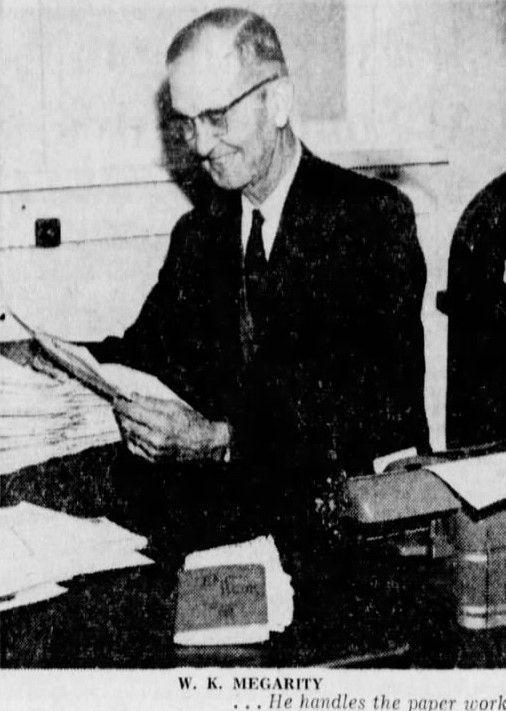

     WALTER K. MEGARITY -- From 1938 to 1961, he was the Shreveport Sports' business manager and traveling secretary. Originally from a large family in Corsicana, Texas, he was an integral -- but mostly hidden -- part of the Sports' operation. A Shreveport resident for 65 years, a self-employed accountant after his baseball days, he died on July 18, 1974, at age 83. 


     B.A. HARDEY -- The longtime independent oilman, involved in the business from 1914 until his death in 1963, was mostly a behind-the-scenes fan and part team owner of Shreveport's teams. A University of Texas graduate, commanding officer of the U.S. Army's 64th Anti-Aircraft Battery in World War I, he was a co-owner of the Sports from 1938 to 1961. He reached the rank of major in the Army, and was involved in a wide variety of civic causes and government agencies. He died in Shreveport on Oct. 12, 1963, at age 69.
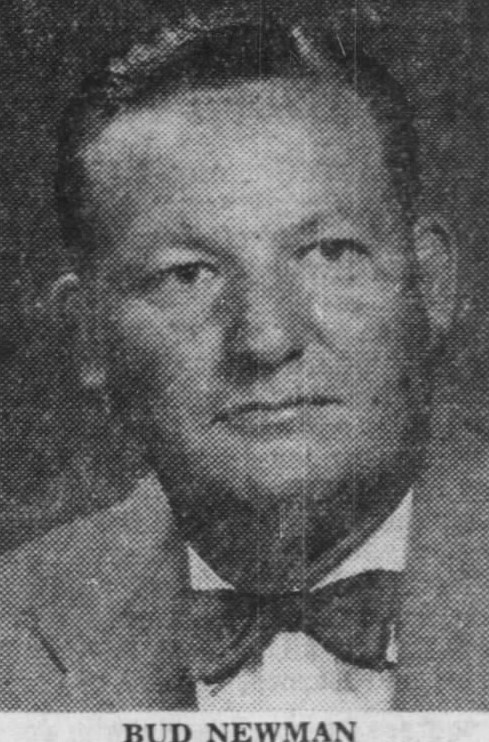

     C.A. "BUD" NEWMAN -- The son of Shreveport ballpark groundskeeper Pop Newman, he was a minor-league umpire for two decades -- beginning in the Evangeline League in 1935 and including a couple of years in the Texas League in the early 1950s. He retired from pro umpiring when in the American Association in 1955, but continued to call basketball and baseball in North Louisiana for years and still subbed in the Texas League as late as 1970. Distinctly, he was partly deaf and the story that he could turn off his hearing aid when being yelled at fans, managers and/or players drew national attention. As a youngster at the old ballpark in Shreveport, he worked the scoreboard (for 50 cents a game), was an usher and then a grounds worker for his father. He died at age 75 on Feb. 27, 1979.


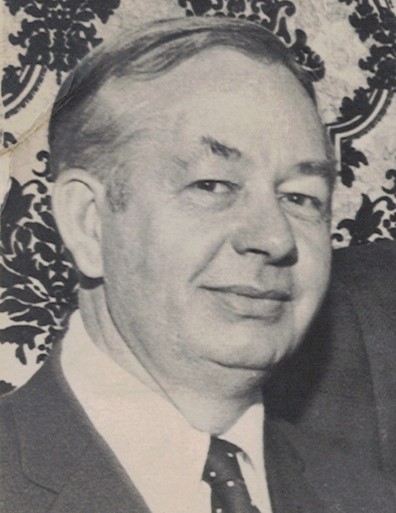
      IRV ZEIDMAN -- The New York native first broadcast baseball for the Monroe Sports in 1951-53, then was the radio play-by-play announcer for the Shreveport Sports from 1954 to 1961 and also for Centenary College basketball for a decade. "This is IZ for 5D, or IZ for JD" were familiar phrases, touting primary sponsors, and "going ... going ... and there she goes!" was his home-team home-run call. Later in life, he was an insurance salesman and, with a strong voice, a community theater musical and drama star, most notably as a  terrific Tevye in a Shreveport production of Fiddler on the Roof. Died Nov. 6, 1975, in Shreveport (heart disease) at age 57.

    
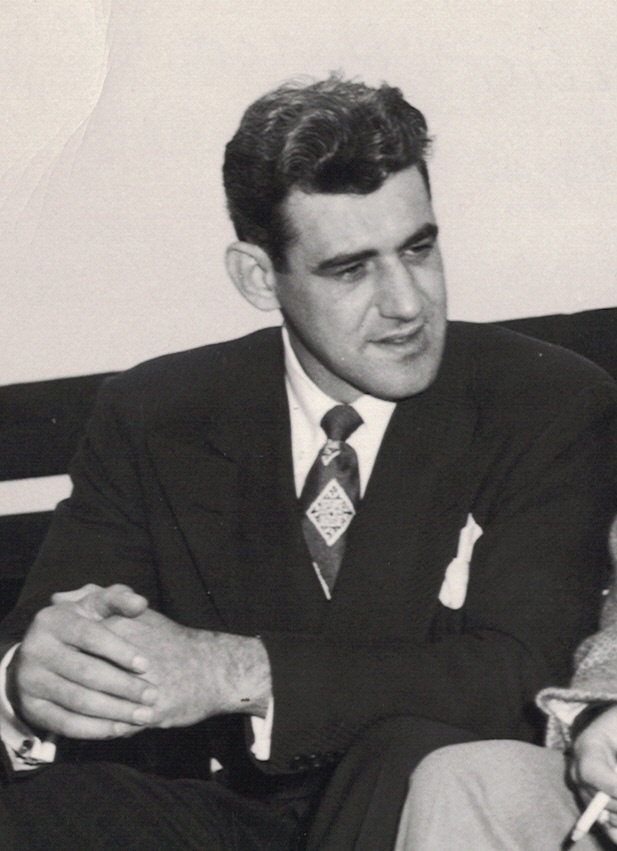
     PAUL MANASSEH -- A Shreveport native and Byrd High School graduate, he was public relations director for the Shreveport Sports in the early and mid-1950s and general manager of the Monroe (La.) Sports. He went from Shreveport to PR director for the Denver Bears' baseball team in the American Association, then for the Denver Broncos in the first four years of the American Football League. He returned to Louisiana as sports information director at Louisiana Tech in 1968, then became SID at LSU for 12 years -- the Tiger Stadium press box is named in his honor -- and then director of the Independence Bowl in Shreveport. Died Feb. 20, 2000, in Baton Rouge (from injuries suffered in an automobile accident) at age 79. 
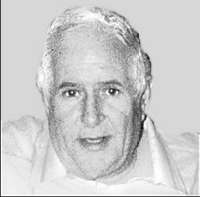
     ALARIC SMITH -- He was a Bossier City resident all his life and the Bossier High graduate got into umpiring in the late 1940s, was in the TL through much of the 1950s, often teaming with Frenchy Arceneaux for a Shreveport-Bossier-based tandem (as they did in area high school and college basketball). Smith moved on to the International League, then to the American League for five seasons (1960-64) for 798 regular-season games, plus All-Star Games in 1961 and 1963 and the World Series in 1964 (home plate in Game 6). He was let go after the 1964 season, reportedly for a variety of off-field issues; the “official” cause was that he had exceeded a weight limit. Died Nov. 14, 2006, in Bossier City, at age 81.

Game 5, bottom ninth inning, 1964 World Series: Alaric Smith, the first-base umpire,
faces off with New York Yankees’ manager Yogi Berra after Joe Pepitone, right, was called out
 (after a throw by Cardinals pitcher Bob Gibson) on a close play. Film proved Smith made the correct
 call. The next batter, Tom Tresh, hit a game-tying, two-out home run. St. Louis won 5-2 in 10 innings.
(Associated Press photo)


     FRENCHY ARCENEAUX -- His given name was Kurcy Paul (K.P.), but he was "Frenchy" to everyone, and he was one of the Texas League's best known -- and most controversial -- umpires, starting in 1949 and working through the 1950s. He was an imposing figure (6-foot-2, 230 pounds) and stories abound about his toughness and his competence. He also officiated area college and high school basketball games for years, many times partnering with fellow baseball umpire Alaric Smith. After retiring from the field, he did work for the Shreveport Braves’ front office in the late 1960s, and died in 1971 at age 48.

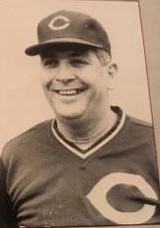

      JAMES C. FARRAR -- "The Man From Lillie (La.)" was a scout for the Houston Colt 45s/Astros for a couple of decades, and for a time, a coach with their rookie league teams in the summers. He combined his scouting days with a very successful baseball/football coaching career at Fair Park and Northwood High Schools in Shreveport in the 1960s/early 1970s, then became baseball coach (1978-85) and head of the health and physical education department for a couple of decades at Centenary College (where he was Dr. Farrar). After retiring from baseball at Centenary, he resumed his Astros' scouting position -- the “name” player he spotted and signed was longtime ace pitcher Roy Oswalt -- and was named the organization's "Scout of the Year" in 2002. Died Oct. 30, 2012, in Shreveport at age 81.  


CHARLIE "SAM" WILKINSON -- A Shreveport Sports batboy in the mid-1950s, an All-State first baseman for Fair Park High School in 1960, he joined the Houston Astros' organization in 1967 -- thanks to connections with Mel McGaha and James Farrar. He was a trainer/equipment manager at several stops (including Triple-A Denver), general manager with the Astros' rookie-league team in Cocoa Beach, Fla., one year, and visiting clubhouse man in Houston in 1977, helping out in the Astros' clubhouse, too. He then joined Louisiana Tech University as a trainer in '77 and stayed for 30 years in a variety of athletic department jobs.


Dave Nitz with Willie McCovey, a Baseball Hall of
Famer and former Texas League player with Dallas,
at Fair Grounds Field in 1987.

       DAVE NITZ -- For 20 years, he was the radio play-by-play announcer and de facto publicity director for Shreveport's pro baseball teams -- 14 years (1986-99) with the Captains in the Texas League, six years with independent league teams. (KEEL carried those games for 12 years; KWKH for four; KRMD for three; and KYLA-FM for one.) The West Virginia native, in 2017, was in his 36th year of minor-league baseball announcing (the last nine years with the independent Sioux City Explorers), having passed the 4,000-game mark. In the fall of 2019, the longtime Haughton, La., resident will begin his 45rd year as play-by-play announcer for Louisiana Tech University athletics, nearing 3,000 Tech games.


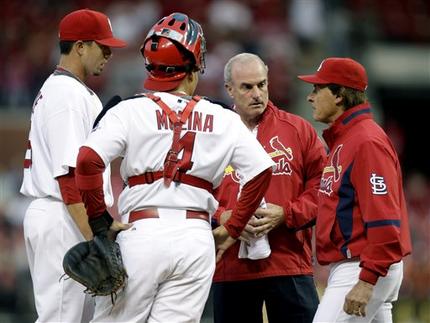
BARRY WEINBERG -- From Silver Spring, Md., he was the trainer for the 1976 and 1977 Shreveport Captains, part of the Pittsburgh Pirates' organization. (He played left field for the Captains in three games at the end of the '77 season, going 1-for-6, and the hit was a double.) He made the major leagues as assistant trainer of the New York Yankees in 1979-81 and spent 33 years as an MLB trainer, 24 with teams managed by Tony La Russa (16 years in Oakland, nine in St. Louis). That means three World Series championship rings for Weinberg (1989 Athletics, 2006 and 2011 Cardinals). At age 66 in 2017, he was with the Cardinals as senior medical advisor.
Barry Weinberg as Shreveport Captains' trainer in 1976-77.


     Also on radio: JERRY BOZEMAN, an enthusiastic promoter and man-about-town, was the play-by-play announcer on KWKH-KTBS for the Sports and various other sports events, from 1938 to 1942, usually accompanied by wire operator Seth Rachel. ... AL DONALDSON, who had been a sports radio announcer since 1937, was the Sports' play-by-play man on KENT for five seasons (1948-52). There were no game broadcasts in 1953. ... DOUG GREENWALD was the Captains' play-by-play announcer in 2000 on KWKH, then did Swamp Dragons' games in 2001 on KEEL. No game broadcasts in 2002, Shreveport's last season in Organized Baseball.  


     Also: ALEX THOMAS (left), longtime clubhouse man for the Fort Worth Cats and Shreveport Braves/Captains. … Shreveport Braves general managers BOB MORRIS (1968) and BOB BURTON (1969-70), Captains general managers EARL JOHNSON (died during the 1971 season), DAVID SZEN (1972-73), MIKE HALBROOKS (1975, JOHN W. MARSHALL III (1979-80) and JON LONG (assistant 1979-80, GM 1981-92); GILBERT LITTLE and ROXY DANCY in the 1990s; assistant general manager ELIZABETH DENHAM in the 1980s and early 1990s (as one of the first women in a baseball management role); JAY CICERO, assistant GM; TERRY SIPES, who served in the front office during the 1990s and 2000s and was general manager of the independent league teams. 


Wednesday, October 25, 2017

If he were a rich man ... he WAS a rich man

         (Part 4, last in series)
         Irving Zeidman was Shreveport's Tevye, and what a great Tevye he was. Never saw a better one.
         He knew he could play the role, sing the songs (If I Were A Rich Man, etc.) of Fiddler on the Roof.
          So when the Shreveport Little Theater acquired rights to do the play in 1971, Irv's acting chops resurfaced. He first had acted in community theater -- drama and musicals -- in Monroe in the early 1950s, then again in Shreveport about a decade later. 
          He and the Fiddler cast were quite a hit at the Marjorie Lyons Playhouse -- adjacent to the Centenary College campus -- in the summers of 1971 and '72.
         Nothing but sellout performances. Only eight shows were scheduled in 1971, but demand for tickets were so great, the show was extended three times ... to 18 performances. And then staged again -- encore -- the next summer, with Irv still as the dairyman.
         We saw the play twice. He was as good as -- yes -- Zero Mostel (Broadway stage) or the Israeli actor Topol (movie).          
        Here is who agreed: longtime Shreveport Little Theater producer/director and Centenary theater/drama/speech professor Robert Buseick, who directed Irv in Fiddler.
        In 1971, he told The Shreveport Times entertainment writer/critic, "I had seen eight previous productions [of Fiddler] and never had I seen a finer Tevye than IZ."
        Not surprisingly, if you knew IZ, he added this, " ... Irv was very friendly, but frequently wore his emotions on his shirtsleeve and he could be very easily hurt."
The Zeidman family, 1971, on the set of Fiddler on
the Roof i
n Shreveport.
        That might have been tough love from a director, but from audiences of that day there was nothing but love for Irv.
        Mrs. Zeidman (Hazel) helped, too, behind the scenes with costuming and staging and keeping the cast fed and entertained. And it was a great family gathering for the Zeidman kids, who returned to town for performances (and a group photo).
         Unanimously, he was chosen The Times drama award for best actor for the 1971-72 season, and he went on in subsequent years to play in Cabaret (Herr Schultz) and Man of La Mancha and a couple of other productions. 
         Then his heart began to fail. Two heart attacks, and doctors warned him his time might not be long. 
         He did not quit trying; he was a daily runner -- well, jogger -- and he kept at it. He kept his beard, grown for the Tevye part, too, until the end.
         And that came in early November 1975. His mother-in-law found him, sitting in the living-room lounge chair usually Hazel's spot, unresponsive. Rushed to a hospital, he was already gone. He died peacefully in his sleep.
         Hazel was in California, attending to a difficult childbirth for oldest daughter Barbara. So the funeral was held up a day or two for Hazel's return to Shreveport.
         Going through his papers in the following days, his family found a sheet of paper on which, thinking back to his early days, he had written the lyrics to a Jewish song for children that he would sing to his own young children in Hebrew.
         At the time of his death, his sister lived in Florida; his brother, who was a butcher, lived in Trenton, N.J.
         Hazel outlived Irving for 41 years until December 2016; she was 96 1/2. She spen the last 12 years after a stroke in a care facility near Susan and husband Bill in Celina, a little town just northeast of Dallas. 
         Barbara, now 75, recently moved from Shreveport to San Diego to be near family.
         IZ had nicknames for so many, and Barbara long ago  was "Babu," his first baby. He called the kids, when they were young and zany, his "Zeidmaniacs." The favorite family dog, a dachshund, was "SubaD," a combination of the kids' names.
         And I suspect that it was Irv who tagged our favorite Shreveport Sports' player back then, Lou Klimchock, a star prospect in 1959 at age 19, as "Baby Lou."
        Irving knew his first three grandchildren; there are now nine. Irv and Hazel have eight great grandchildren (and counting).
        Certainly Irving would have sung to them all.
        It is easy to speculate that IZ could have been a major-league baseball broadcaster or Broadway performer based on talent. But, Susan said, his family had settled in Shreveport, he liked the town and he was comfortable. He did not want to uproot Hazel and the family, keep them moving and into the big cities for possible fame and fortune.
         It was the big fish/little pond or little fish/big pond option, and Irv chose to be a big man in Shreveport. And a happy one.
         "He was just a great big bundle of good humor," Jack Fiser -- another of my mentors and McIntyre's predecessor as sports editor/columnists at The Times -- told Bill in 1975. He was a Zeidman contemporary, covering the Sports and Centenary. "The way I'll always remember him, he was one of the most consistently happy men I've ever known. A man of intense talent ... in all times." 
         IZ spread the happiness at home. "He was always like a kid at Christmas," daughter Susan recalled. "He loved seeing his kids and grandkids with their presents." 
---
         So he wanted to play Zorba, but it never happened. For his memorial service, Rev. Burton D. Carley, in 1975 the first minister of All Souls Unitarian Universalist Church (where Irv and Hazel attended), wrote a poem in his honor.

         It began: 
              Dear Irv, wherever you are:
              I just wanted to tell you
              That you really didn't need to play Zorba.
              You were Zorba -- I mean all his best qualities!
              Your love for life,
              Your earthy humanness and personal warmth ...
         It includes:
              Anyway, I just wanted to tell you: 
              I loved you Irv Zeidman.
              I am better for having known you
              And so is all the earth.

         (Personal note: Rev. Carley, who retired in 2015 at age 67 after 32 years as minister of First Unitarian in Memphis, presided over our wedding in February 1977.) 
         So when IZ chose Shreveport, it was a rich decision for us. 
          The only way to end this series is the way Jerry Byrd began and ended his column in 1975, and the way Bill McIntyre ended his column. Both referenced Irv singing, If I were a rich man ...
          Irv Zeidman -- the best Tevye -- was a rich man.

Sunday, October 22, 2017

IZ: the road from Jersey to Louisiana

       (Part 3 of 4)
       How did Irving Zeidman end up in Louisiana? He hopped a train ... several trains. He got off for good, in Monroe.
Irving, at age 13
       Born in New York City, a kid in Brooklyn and then Boonton, New Jersey (30 miles slightly northwest of NYC), he was tall early and a good high-school athlete.
        He was one of three children of Jewish immigrant parents -- his father Abraham, a tailor, was from Poland; his mother, Sena (Tsena in Europe), was from the Sephardic tribe in Spain. An older sister, Betty, was born in Poland; Irving was born in 1918; a  brother, Morris, followed.
        Irving grew to 6-foot-4 and was a champion discus thrower and rangy, solid end in football. Wake Forest offered him a chance at college football.
        Irv took a train south, to Winston-Salem, North Carolina. But it was 1940, anti-Semitism was rampant -- of course -- in Europe and too often here in the U.S., and just after he arrived at Wake, Irv heard too many "Yankee Jew" references (taunts?).
        He left, after one day. 
        He and a buddy hopped a train going south bound for ... who knew? 
        IZ's daughter Susan, who lives in Frisco, Texas, said they went from town to town, begging for jobs at the train depots -- washing dishes, cleaning floors -- to earn spending money so they could keep traveling.
        One train stopped in Monroe, Louisiana. And here Irv heard something that appealed: the local junior college (Northeast) was looking for football players.
        Jim Malone had a powerhouse program in the late 1930s and he would coach at Northeast until the early 1950s when it became a four-year school. The now Louisiana-Monroe football stadium is named for him. When Coach Malone met young Irving, he suggested he join the team.
        He played for two seasons at Northeast, well enough to earn an invitation to play at Louisiana State Normal School in Natchitoches. 
Irving and Hazel: the early days
        But the most important part of his stay in Monroe: At school, he met Hazel Bandy, a strawberry blonde who lived with her parents in West Monroe.
        They soon were in love ... for the next 35 years.
        When Irving headed to Natchitoches, so did Hazel. On December 14, 1941 -- one week after Pearl Harbor -- they married.
        The marriage was at the Methodist church in Natchitoches; the women's group there gave them a wedding reception. In that church, Irving did insist on one Jewish wedding ritual -- and he stomped on the glass to break it.
        The Bandys thought Irving, with the sparkling personality many of us would come to know, was the right guy for their Hazel. But the interfaith marriage, as you might expect in 1941, did not sit well with the Zeidmans. 
        Susan: "Dad wrote a beautiful love letter to his folks telling them about Mom, and they could not help but love her."
       For a honeymoon, the Zeidmans took an extremely cold bus trip to Chicago for a Methodist conference, and were fortunate to escape uninjured when the bus slid off an icy road. 
       In downtown Natchitoches, Susan said, Irv began his public singing career, taking part in the annual Christmas Festival.
       The first child, Barbara, arrived in late in 1942. And with that, a sad story. Irving's mother had saved money to travel to see her first grandchild. She took the train from Jersey to Miami for a visit there, then on a train headed to Louisiana, she had a fatal heart attack.
       Susan's daughter, Sena, is named for her great grandmother.
Irv, the World War II soldier
        But Irv never got to play football for the school that a couple of years later became Northwestern State College (then University). The U.S. Army intervened, as it did with thousands of young men in those early 1940s World War II years.
      So he did not have a lot of time with the baby Barbara. He left and soon learned that Hazel was expecting again. 
       He wound up in the personnel department of the medical corps, as a first sergeant, and in exotic locations such as South Africa and India.  
        Irving eventually made his living talking into a microphone, but he also was a prolific and talented writer.
        Susan has copies of the extensive letters he wrote while in the Army and sent home -- interesting details of his surroundings, his moods, upbeat, with the humor he always could find, and full of -- well -- mush. "I love you, my darling," he wrote, "and am missing you. I'll love you forever." (And he did.)
         In a 1943 letter, with Hazel nearing delivery, Irv was anticipating a boy he was calling Benjamin (Benjie). Soon, said Susan, he was on stage entertaining troops when he received a telegraph saying he was the father of twins -- Susan and a boy they named David.
        But it wasn't all upbeat. Eventually the war -- men killing men and innocent people -- led to a mental breakdown, and a trip stateside to Brooke Army Medical Center (San Antonio) and rehabilitation.   
        Discharged from the service at the end of the war, life began again for Irv and the Zeidmans in Monroe.
---
        The kids were young -- "we were born so close together, we were like triplets," said Susan -- and the family expanded with Danny's birth in 1946.
        And Irv's career path opened with a job at KNOE Radio.
        Here he became (1) a local personality, involved in many endeavors and (2) significantly, a baseball broadcaster (1951-53, Monroe Sports, Class C Cotton States League).
"Uncle Irv," a popular radio man at KNOE in Monroe
        He was "Uncle Irv" on what was reported as a "phenomenally popular" morning radio show. Each week he featured a "happiness exchange" in which people were invited to nominate candidates for "mother of the week."
        He was named assistant manager of the radio station and had a 15-minute singing program every Sunday for three years. 
        That might have been a warmup for his involvement there -- naturally -- in local theater productions (Abie's Irish Rose was one).
         And -- ready? -- (from a Monroe newspaper article), he contributed toward the development of Little League Baseball in Monroe/West Monroe, helped in completion of a ballpark; led development of the Ouachita Parish Health Council, chairman of the Juvenile Detention Home committee, involved in the Milk Fund, the Heart Fund, the March of Dimes and the Crippled Children's board.
        All that, in addition, to TV and radio sportscasts.
        Little wonder he was named "Man of the Year" for 1953 by the Monroe-West Monroe Junior Chamber of Commerce, honored at a banquet.
        But he wasn't there. After the end of the 1953 baseball season, Irv accepted a job at WSMB Radio in New Orleans.
        So his mother-in-law accepted the award, and Irv was recognized by the Junior Chamber chapter in New Orleans, but after sending a nicely worded telegraph with thanks for the honor and his appreciation for the Monroe area.
---
       One other notable opportunity developed in Monroe, said daughter Susan. Word of his acting/singing prowess reached two musical theater giants, Richard Rodgers and Oscar Hammerstein (you might have heard of them). They invited Irving to New York City for a tryout. 
        To pay for the trip, he did a number of fund-raising musical performances around Monroe. 
        It went no further, perhaps because Irv liked family life better than the uncertainty of show business.
---
        The stay in New Orleans was short. The Zeidmans did not feel at home and were not satisfied with the kids' schools.
        Although Irv stayed involved in sports -- he did radio play-by-play on the 1954 Sugar Bowl game (Georgia Tech 42, West Virginia 19) -- by the spring, he had accepted a job at KNOE Radio in Shreveport ... home station of the Sports. 
        The Zeidmans were there to stay. The kids went to Shreveport public schools; all graduated from Byrd High (Barbara in 1960, Susan and David in 1961, Danny in 1964). At the time of Irv's death, all the kids had moved on.
        In Shreveport, reconnected with two of the leaders of his Monroe Sports years -- Al Mazur and Paul Manasseh.
        The Monroe team had a strong Shreveport Sports connection; it was like a farm team. Several young men played first in Monroe, then in Shreveport, including future major-league pitchers Billy Muffett, Bill Tremel and Jim Willis.
        In 1950-51, Mazur -- the Sports' dependable second baseman from 1946 to '49 -- was the Monroe manager; his '51 team won the Cotton States pennant. Manasseh, a Byrd High grad, was the Monroe business manager.
        By 1954, Mazur had retired from baseball and begun his 33-year stay as the well-respected chief probation officer for the Caddo Parish juvenile court.
        Manasseh had returned to the Sports as publicity director. In the late 1950s, he moved to Denver as publicity director for the baseball Bears (Triple-A) and the first PR man for the woeful Denver Broncos of the new American Football League. Eventually he returned to Louisiana; most notably as sports information director at LSU.
        Manasseh and Zeidman not only shared Jewish backgrounds, they shared jokes and stories. 
        Manasseh told Bill McIntyre for his 1975 Shreveport Times column that he "recommended him [IZ] thoroughly" for the job at KENT. Jerry Byrd's Shreveport Journal column said that Manasseh often would call Zeidman -- without saying hello -- and tell him a good story, then simply hang up.
        Irv, when applicable, would tell the story with a Yiddish dialect.
        And Manasseh recalled being out with IZ when Irv would take over the mike at an establishment and serenade the crowd.
        In 1975, when LSU played Rice in football at Shreveport's State Fair Stadium -- LSU's first game there in 16 years -- Zeidman offered to sign the pregame national anthem. That didn't work out, but Manasseh hired him to do the press box play-by-play announcements.
        So we got to hear Irv on the mike again. Two months later, he died -- and as Manasseh noted then, he had just mailed Irv his $15 payment.
        A poignant story involves Manasseh's daughter Marcae, the oldest of Paul's three children and the only girl.
         "When my sister was a toddler, Irv would hold her and boastfully promise to sing at her wedding," recalled Jimmy Manasseh, the youngest child and now an attorney in Baton Rouge (and LSU's press-box announcer for home football games; the press box is named for his father),  
        Cruelly, at age 20, Marcae -- before wisdom tooth removal surgery -- had a fatal allergic reaction to the anesthetic. It was a month before her scheduled wedding.
        "Irv was crushed just like our family," said Jimmy. "Instead of singing at her wedding, he sang beautifully at her funeral. It was terribly sad yet comforting to my family."
        Jimmy said that "one of the only times I saw my Dad cry was when he learned of his [Irv's] death. They were very close. He always meant a lot to my Dad."
        He meant a lot to many folks.
        Next: If he were a rich man ...


Wednesday, October 18, 2017

Irving Zeidman: sports broadcaster

      (Part 2 of 4)
      I first "met" Irv Zeidman -- play-by-play broadcaster of the 1950s-early 1960s Shreveport Sports -- on radio. 
      He was a fabric of the baseball teams of my youth, the  main connection through radio. Same with the basketball-playing Centenary Gents, for me from 1958 to 1965.
      He was, for those familiar with sports broadcasting in North Louisiana, the forerunner to two future legends: Jim Hawthorne (Centenary, then LSU) and Dave Nitz (Shreveport Captains and Louisiana Tech athletics).
       They were good. They were not IZ.
       My IZ experience began with -- I might have written about it previously --  our first radio in the United States.
       We did not have a television yet; we had never had one in The Netherlands. Radio was how I first connected with sports (Dutch soccer). So when Dad came home with a radio early in 1956, only a month or two after we arrived in Shreveport, it was unique.
       It was in the shape of a microphone with large letters on it: KENT.
       Bill McIntyre's Shreveport Times column on Irv in November 1975 reminded me: "... The station used to give away, or sell, small radio sets. The only station you could get on it was KENT."
       Yes, one station. 
       Hardly knew anything about baseball, but we went to a game early that season -- Texas League Park was within walking distance from where we lived -- and I learned that the games were broadcast on ... KENT.
       Perfect.
       IZ taught me a lot that memorable season (it was the year Ken Guettler hit a Texas League-record 62 home runs for the not-so-hot, seventh-place Sports).
       Speaking of home runs, I recall Irv's call: "It's going ... going ... going ... and (drawing it out) theeeerrrreee she goes." (The reason I recall it is because in the early 1970s, I wrote a column in The Times mentioning that, only I messed it up -- as Irv pointed out to me a few days later.)
Irv Zeidman, second from right, taking part in a mid-1950s Shreveport
Sports baseball promotion; that is majority team owner/operator
Bonneau Peters (white hair, crew cut)
       Here is what else those Sports listeners remember: "IZ for 5D." Cities Service was the main sponsor for the broadcasts; 5D was its premium gasoline, and Irv was doing the commercials. 
       From 1959 to '61, when the Sports were in the Southern Association and one of the broadcast sponsors was Jett Drilling (George Jett was one of the team investors, with general managing partner Bonneau Peters), Irv's slogan became "IZ for JD."
       He was the "voice" from Texas League Park-turned-SPAR Stadium and from the road-game "re-creations" done from a radio studio via wire-ticker play-by-play.
       "He was masterful at that," his daughter Susan recalled. "He had all the sound effects, and he could tell a good story [to fill the time.]"
       To a young listener not exactly aware of that, he could have fooled me ... and did. I thought he was always on the scene ... in Birmingham or Atlanta, Chattanooga, Memphis, New Orleans, Fort Worth, Dallas, wherever. 
       I thought Irv as a baseball broadcaster was as good as any I'd heard. In Shreveport, we had St. Louis Cardinals' games -- as in much of North Louisiana -- and later the Houston Colt 45s/Astros and, for a time in the mid-1960s, the Chicago White Sox, and later the Texas Rangers. Irv Zeidman was as interesting, as professional, as any of the broadcasters.
       And maybe he was even better at college basketball. Any chance I had to listen to him do Centenary games, I tuned in (these were my junior high and high school days). Heard him do Gents' games from our Hirsch Youth Center to Philadelphia to Arizona and throughout the South.
       He was not impartial. OK, Irv was a "homer," no question he was taking the side of the Sports or the Gents. If he disagreed with umpire or officials' calls (and that was often), you knew. And Jerry Byrd wrote in a 1975 Shreveport Journal column, baseball official scorers' decision were not exempt. 
       McIntyre's column tells several stories of how the Centenary delegation, on road trips, made life an adventure for Irv -- and vice versa. 
       One story: "He was such a good sport," said then-Centenary athletic director/head basketball coach Orvis Sigler. "He loved those boys and we had a lot of good times. Irv never met a stranger. He used to like being recognized wherever he went and once, in Richmond, Don Ensley paid a little shoeshine boy to go up to him and say, 'Hey, aren't you Irv Zeidman.' "
       Here is what else Coach Sigler said then, and what I remember:
       "I always thought he was a great broadcaster because he got so excited and involved. He lived and died with those boys. And I used to say he inhaled and didn't chew his food so he wouldn't miss a word."
       For a couple of years, KSLA-TV (Channel 12) in Shreveport showed Centenary home games on a delayed basis late at night, following the 10 o'clock news, with Irv doing the play-by-play. I watched those, often rushing home if the team I was keeping stats for also played that night.
       Centenary dropped its broadcasts in the mid-1960s (not enough sponsors), but Irv didn't drop the Gents. He was an avid fan. 
       At a game in Ruston, maybe 1968, IZ was upset at a string of officials' calls that went against Centenary (we, Louisiana Tech, won the game) and he came out of the stands and headed for the floor toward those officials. He was, thankfully, stopped short.
       Both McIntyre and Byrd's columns mention that, but I didn't need the reminder; I distinctly remember it. By now I was a Tech student and sports information assistant/statistician reluctantly rooting against Centenary. So I had to laugh. Tough luck, IZ.
       By then, he had become a chartered life underwriter for Prudential Insurance, but he never lost his love for the games and his teams.
       In the early 1970s, during the Robert Parish era, Irv had a couple of heart attacks and was warned not to get too excited. So he would go to Centenary games, but when they got close near the end, he would head to the Gold Dome foyer and wait it out. 
       His broadcasting career in Shreveport began in 1954 when he was hired by KENT, primarily to do Sports games. 
       He was a good-luck charm.
       That season, 1954, was the only time from Shreveport's recorded pro baseball history through 1986 -- so, roughly 65 seasons -- that Shreveport finished first in its league in the regular season.
       McIntyre's column: " 'We came in the same year together,' remembers [team manager] Mel McGaha, going back to 1954. 'Every tie he introduced me from then on -- we won the Texas League pennant that first year -- he always took credit for it and passed it on down the line ... IZ as 5D, and he brought us in No. 1.' "
        The next year the Sports won the Texas League playoffs and played in the Dixie Series (vs. the Southern Association champions). The following year was the Guettler season. 
        And Irving darned near brought in the 1960 Sports as Southern Association regular-season champs. Missed by a half-game.
        Couple of other memories: 
        One I remembered, and used in that Times column -- Irv said he was in Yankee Stadium on October 8, 1956, when Don Larsen pitched his World Series perfect game (Game 5 vs. the Brooklyn Dodgers. (Irv, having lived in Brooklyn as a kid, was rooting for the Dodgers.)
        The other: Susan's clippings showed that, in 1961-62, Irv did a weeknight sportscast on KTBS, Channel 3 ... as far as I know, the first TV sportscast in Shreveport. (Bob Griffin on KSLA-12 came along a couple of years later.)
        IZ's broadcast career, and his baseball broadcasts,  actually began in Monroe, La. In fact, his life in Louisiana began there. It was a long road. That's a story in itself.
        Next: Hitting the road