Thursday, April 18, 2019

Dr. Smith asks: Greatest golf comeback story -- Hogan or Tiger?

     So the kind, elderly gentleman -- a prominent preacher here in Fort Worth -- who is an around-the-corner neighbor on our floor asked me:
     Which is greater: Tiger Woods' comeback story or Ben Hogan's comeback story?
     Dr. Lamar Smith, 91, then said I should investigate the question. So I am posing it to my reading audience.
     Here is my answer: Ben Hogan, no doubt.
     Simple premise: Hogan darned near died in the 1949 accident when his car ran head-on into a Greyhound bus.
      Tiger, as you well know and has been written 108,245 times in the past, is back in a Masters green jacket after eight back and knee surgeries, a sex scandal and rehab, a DUI-related rehab, divorce, too many girlfriends to count, etc.
       But he wasn't close to death, as far as we know.
       So, for Dr. Smith and everyone else, here is the Hogan portion of a September 2018 Golf Digest story headlined "Tiger Woods and 9 other remarkable career comebacks in sports":
     "While this list isn't limited to golf, we'd be remiss to not start it off with Ben Hogan, who suffered a number of gruesome injuries in a head-on car collision ... Despite those injuries being career-threatening, Hogan improbably returned to the PGA Tour in 1950 and won the U.S. Open that season at Merion Golf Club. His schedule was limited throughout the rest of his career, but he still managed to win five more majors between 1951 and 1953."
     From a pga.com story in 2018, on the 50th anniversary of Hogan's return to golf after the accident, here are details of the man's injuries:
    "... In a successful attempt to save his wife's life by throwing himself in front of her, Hogan likely also saved his own life since the steering column punctured the driver's seat.
Ben Hogan and the crashed car.
    "Hogan, 36 at the time, suffered a double fracture of the pelvis, a fractured collar bone, a left ankle fracture, a chipped rib, and near-fatal blood clots; he would suffer lifelong circulation problems and other physical limitations.
    "Fifty-nine days after the accident, Hogan was out of the hospital and by November of that year, he resumed golf activities."
     And, yes, we are partial because he was Fort Worth's finest golfer and longtime resident.
      If you want the whole list of comebacks in this particular story, here is the link:
 https://www.golfdigest.com/story/tiger-woods-and-9-other-remarkable-career-comebacks-in-sports-history 
     If you are really diligent and want all the links on this subject -- greatest comebacks from injury in sports -- try Google. There are plenty of choices. A few more links ... 
https://bleacherreport.com/articles/845881-the-20-biggest-injury-comebacks-in-sports#slide20
https://www.mensjournal.com/sports/13-athletes-who-made-amazing-comebacks-after-career-threatening-injuries/
https://www.insidehook.com/article/sports/these-athletes-made-amazing-comebacks-from-horrific-injuries-illnesses
---
     As for the man asking the question, a little about Dr. Smith:
     He was the longtime associate pastor of evangelism at First United Methodist Church of Fort Worth. He "retired" in 1997, but most days -- when he is feeling good -- he drives the few blocks to the church and still works, meeting the people with his good words.
      He is a legend at his alma mater, Texas Wesleyan University, where he has ties dating 70 years. He was first president of the alumni association in the early 1950s, was interim president in 2010-11, and honored with the naming of the Rev. Dr. Lamar Edward Smith Center for Evangelism and Church Growth, part of the Central Texas Conference building.
Lamar Smith at Conference Center (2) 10.13.15      And he recently was honored with the Law Sone Medal, named for the longtime Texas Wesleyan president. It is on a lanyard, so he can wear it for display, and I think he has taken it off one or twice the past couple of months. 
     Not bad for a young man who moved slightly west after growing up in Mineola, Texas, and who served in the U.S. Navy during World War II.
     His career in the ministry began at Fort Worth's First Methodist in 1955 and in 13 years as associate minister he welcomed more than 5,000 new members.
     He also is a humorous, story-telling man -- aw, heck, he is downright funny -- who, when reading the daily papers downstairs in one of our breakfast rooms, makes the sports section his first choice.
     His pastoral days took him from Fort Worth in '68 to a couple of other Texas stops and at one point to the Methodist church on the LSU campus in Baton Rouge.
     Which leads to one of Dr. Smith's favorite little stories, his move from the Methodist church in Wichita Falls, Texas, to Baton Rouge ...
     "When I left Wichita Falls, the last bumper sticker I saw said, 'Honk If You Love Jesus.' When I got to Baton Rouge, the first bumper sticker I saw said, 'Go to Hell, Ole Miss.' "
---
    Back to Tiger and Hogan ...
    Mr. Ben -- "Bantam Ben" was one of his nicknames -- won 11 more PGA Tour titles after his return from the accident. That is fourth-best all-time.
     Tiger Woods, after this Masters, has 81 PGA Tour titles -- one behind all-time leader Sam Snead. So Tiger very likely soon will be the greatest winner of all, and his comeback is off-the-charts tremendous.
     But greatest comeback story? Dr. Smith and I will stick with Hogan.   

Monday, April 15, 2019

That's the old ballgame Shreveport, chapter 13 (the managers, Part II)

Chapter 13
The managers, part II (1941-78)

     FRANCIS "SALTY" PARKER (1941-42, 1946-51) -- separate, chapter 11

    MICKEY LIVINGSTON -- A catcher, he was the Shreveport Sports' player-manager for two seasons (1952-53), his first managing job, and the first season brought a Texas League championship. His second season was not as successful, but he was re-signed for 1954, only to be fired when -- without the team's permission -- he opened a bar (with his name) in a downtown Shreveport hotel. He sued for breach of contract, but lost the suit. He had been mostly a reserve in 10 seasons in the major leagues, although he was a starter and star in the World Series for the 1945 Chicago Cubs (eight hits, three doubles, four RBI, a .364 average). His last MLB stop was two games for the Brooklyn Dodgers in September 1951, after he spent the bulk of the season in the Texas League, batting .307 for Fort Worth. His '52 Sports were third in the regular season (84-77 record), then won the league playoff championship and lost in the Dixie Series. Livingston hit .274 with 18 doubles and five homers in 111 games that season. The 1953 season didn't go as well; he hit only .159, the Sports went 79-75, and did not make the playoffs. He was back in the TL in 1954-55, managing and playing for Beaumont. His managing career (five seasons) soon ended and he was out of baseball by age 41. As a player, his career went from 1937 to '56; his major-league debut came with Washington in 1938. In 561 games (six organizations), he batted .238, with 19 home runs and 153 RBI. He died April 3, 1983, in Houston, at age 68.

MEL MCGAHA (1954-57) -- Separate, chapter 12.
 
     LES PEDEN -- Slow afoot, but a professional hitter, the bulky catcher was the Shreveport Sports' player-manager for three seasons (1959-61) and hit .300, .327 and .283, while playing in a little more than half the games. He first came to Shreveport for 30 games in 1955 and in a full season in 1956, he hit. 282 in 137 games, with 23 home runs and 88 RBI. The A&M player  and World War II veteran, nicknamed "Gooch," played the first of his 18 minor-league seasons in 1947 and was in the big leagues for nine games, eight starts, for the Washington Senators at the start of the 1953 season (he hit .250, 7-for-28, with one solo home run). He was a minor-league manager for 12 seasons (10 as a player, too) in the Cubs and Athletics' organizations. He managed Little Rock in 1958, and it was one of his best hitting seasons -- .334, 26 home runs, 88 RBI -- and when the Southern Association franchise moved to Shreveport, he came with it. His 1960 Sports, after a furious last-season surge, missed the regular-season pennant by a half-game. He played through 1964 and managed in the Triple-A Pacific Coast League) for three seasons, then stayed in the game as a scout. In the minors, he was a .299 hitter over 1,787 regular-season games, with 249 home runs and 644 RBI. Died Feb. 11, 2002, in Jacksonville, Fla., at age 78.

Charlie Lau coaching third base
 (The Shreveport Times photos)
   CHARLIE LAU -- After a decade as a major-league catcher, mostly a reserve and not a batting star (.255 average), he was the Shreveport Braves' manager at age 35 in 1968, the year after he retired as a player with the Atlanta Braves. Shreveport's team, loaded with past and future major-league talent, went 78-62, but was second in its division. Lau the next year was a coach in the majors and soon became known as one of the top batting instructors -- a "guru" -- in the game. He helped develop some of the Kansas City Royals' stars of their powerful late 1970s/early 1980s teams. He died of colon cancer March 18, 1984, in Key Colony Beach, Fla., at age 50.

LOU FITZGERALD -- His 20-year minor-league managing career ended with the Shreveport Braves in 1969 and 1970. He had five regular-season or playoff championship teams in a 12-year period -- including with San Antonio in the Texas League in the mid-1960s -- but the 1969 S-Braves were 61-75 and after a 3-9 start in '70, he was replaced by Clint Courtney, who had been one of his catchers for Durham in 1962. Fitzgerald, from Cleveland, Tenn., had a 55-year pro baseball career -- as an infielder (never a major leaguer), manager and scout. Paul Richards, the baseball sage from Waxahachie, Texas, was his boss with three organizations: Orioles, Colt 5s/Astros and Braves. He died Jan. 27, 2013, in Chattanooga, Tenn., at age 93.


    CLINT COURTNEY -- He provided a nearly local presence as the Shreveport manager when he replaced Lou Fitzgerald after the first 12 games of the 1970 S-Braves' season. The hard-battling, tough little guy -- "Scrap Iron" -- was from Hall Summit, La., 40 miles southeast of Shreveport and he had been the Braves' minor-league catching instructor. Shreveport's record under him was 55-67 and he would go on to manage Richmond in Triple-A. He had played in the Texas League for Beaumont in 1950, then was in one game for the 1951 Yankees before a decade in the majors (1952-61) for four other American League franchises. He twice was a .300 hitter and hit .268 overall. He was known as (1) the first bespectacled catcher in MLB; (2) a fierce style and frequent fighter; and (3) with ex-catcher and noted manager/general manager Paul Richards' input, the first catcher to use an oversized mitt to catch knuckleballs (thrown by Hoyt Wilhelm with Baltimore in 1960). He was manager of the Richmond Braves when he died of a heart attack -- while playing ping-pong with one of his players -- on a team road trip in Rochester, N.Y., on June 16, 1975, at age 48.


LES MOSS -- The season (1971) he managed Shreveport was unique: (1) it was the first year of the Captains' team nickname and (2) the Texas League and the remnants of the Southern Association and South Atlantic (Sally) League were combined into a 14-team Dixie Association -- a one-year experiment. It was only three years after Moss, a journeyman big-league catcher for more than a decade,  had been interim manager (36 games) for the Chicago White Sox. The '71 Captains went 69-73; after six more seasons managing in the minors, Moss again was an interim MLB manager, 53 games with the 1979 Detroit Tigers -- he succeeded Ralph Houk and was followed by Sparky Anderson. He died Aug. 29, 2012, in Longwood, Fla., at age 87.

Captains 1972 manager Norm Sherry with
baseball commissioner Bowie Kuhn, who was
visiting Shreveport and SPAR Stadium.
(The Shreveport Times photo)
      NORM SHERRY -- He wasn't as famous as pitching brother Larry and only a bit player for the 1959-62 Los Angeles Dodgers. After stints as a Dodgers' minor-league manager and coach for the 1970-71 California Angels, he managed the 1972 Captains (62-78 record) With a roster shortage, he even played in four games at the end of the season (at age 40), going 3-for-9 (.333) with three RBI. In 1976-77, he was the Angels' manager -- succeeding Dick Williams -- for 147 games.

GENE FREESE -- A major-league third baseman for a dozen years, a star with the 1961 National League champion Cincinnati Reds, "Augie" had been out of baseball for five years, living in his adopted hometown, New Orleans, when he was named manager of the 1973 Captains (Milwaukee Brewers' chain). A team that included end-of-the-line, ex-MLB pitching star Denny McLain (right, with Freese) went 70-68. At age 39, Freese played in four games near the end of the season, going 3-for-9,  with a double and two RBI. He returned to manage in '74, but the team faltered (59-79 final record) and he was replaced in midseason by minor-league pitching instructor Ken McBride. He died June 18, 2013, in Metairie, La. -- a New Orleans suburb where he lived for decades -- at age 79.   

TIM MURTAUGH -- The son of the Pittsburgh Pirates' two-time World Series champion manager Danny Murtaugh, he spent 13 years in the Pirates' chain -- six as a catcher, seven as a minor-league manager. His teams had won two championships before he managed the 1975 Captains. They were the Texas League's best team for much of that season, but faded late and, despite a 76-52 record -- the best for a Shreveport team over a 56-year period -- and 98 more runs than their opponents, finished two games behind Midland in the West Division. He then managed in Triple-A for 1½ seasons before returning to Shreveport for the second half of the '77 season, and then retired from baseball.

    JOHN LIPON -- A journeyman major-league shortstop for nine seasons and a World War II (Navy) veteran, he was 53 when he managed the 1976 Captains to a division title. It was the 18th of his 30 seasons managing minor-league teams, plus a 59-game stint as the Cleveland Indians' interim manager in 1971. He came back to Shreveport to start the 1977 season, then was promoted to manage the Pirates' Triple-A team, swapping spots with Tim Murtaugh. After his managing career, he was a baseball scout and in 1992 was chosen as the "King of Baseball" for his lifetime contributions. He died Aug. 17, 1998, in Houston, his longtime home, at age 75.

    STEVE DEMETER -- He was a veteran minor-league player -- a good one -- who had short stays in the majors and was a Pittsburgh Pirates' coach for a year before a nine-year minor-league managing career. He maintained a positive approach through a long, difficult season in Shreveport in 1978. Died Feb. 3, 2013, in Parma, Ohio, at age 78.

Friday, April 12, 2019

Mr. Miller was a class act, in many ways

     Watch this video and you are likely to be awed by it, as many of us were when it played at the start of Ralph Waymon Miller's memorial service Thursday: https://vimeo.com/242403680
     A clue, two words: Iwo Jima.
     He was there in the Far East when he saw the U.S. Marines raise the American flag on Mount Suribachi (or Pork Chop Hill), as the island was taken back from the Japanese near the end of World War II, a scene immortalized in photo and statue.
     He was 22 that day -- Feb. 23, 1945 -- as a sailor watching from the deck of a U.S. Navy carrier. As he mentions in the video, he had joined the service the day after Pearl Harbor.
     We lost one of "the greatest generation" last Sunday morning here at our seniors resident facility, a kind old gentleman most of us addressed as "Mr. Miller."
     He was quite a man, with a quite a story.
     "It's one thing to read about events in a history book; it's another to hear it from someone who was there," said his grandson Mark Miller at his eloquent speech in the Thursday memorial. 
     Mr. Miller was 96, and his life was full of family, faith and service. As a career-long educator in Fort Worth (1947 to 1983), he is best known and remembered for a decade-and-a-half as the principal of R.L. Paschal High School -- one of our city's "old" schools, the one closest to TCU.
     He was highly regarded, respected. Significantly, at Paschal, one of the most-used facilities is the Ralph Miller Auditorium.
     He was as much beloved there, as he is/was at Trinity Terrace, our place.
     "He was special, he was a treasure," said Tricia Baldwin, Trinity Terrace chaplain and official at the memorial service.
 ---
     Mr. Miller lived in Fort Worth for 72 years, 66 of them with his beloved Evelyn, and the last 19 at Trinity Terrace -- eight of those somewhat lonely without her.
     But our community embraces each other, and Mr. Miller, for a time, was comforted by a grief-counseling group. And he certainly was always welcomed as he made his way around, slowly but steadily using his walker.
     A couple of days last summer, however, I was somewhat surprised to see Mr. Miller away from our facility, especially when he drove his car past as I was on a walk. Another day, we were in a Montgomery Plaza store when Mr. Miller drove up as we were leaving.
     And his daughter, Beverly Lewis, said that he also took that car on the interstate for a few trips. Age did not deter Mr. Miller.
     With our aging population, death is an everyday reality here at Trinity Terrace, and with a dozen deaths in the past five weeks, it has been an especially tough time.
     Just last week we had a lovely memorial service for Miss Peggy Turner, a strong-willed, generous middle-school librarian and bookstore owner with whom I had a couple of nice visits.
     Earlier in the month, on consecutive days, we lost Bill Kennedy and Jerry Hendrix, two fine, accomplished gentlemen. Cancer. 
     We had been here several months before I learned that Mr. Miller had been the principal at Paschal High, a school where for about seven years I walked the parking lots almost every weekend. Consider it my "home" school here, so to know that Mr. Miller was the guiding force at the place for a long time led to a conversation or two about it.
     He told me that one of his top achievements was to have a street constructed leading into the school, where access had been limited to only one way in. He went to the Fort Worth City Council to express the need for more access -- and it complied, and had the road added, on the back side of the school.
     (More on his working life, and Paschal, in a moment.)
---
     When you saw Mr. Miller, most days he wore a ballcap to cover his bald head. So at the memorial Thursday, on display with several photos were some of his ballcaps -- Texas Rangers, a couple of with GOB (Good Old Boys) logos, a white (University of) North Texas one, one with a 3:16 inscription. But I most liked one of his favorites, a gray/brown one with an Old English "R" for Rice University.
     Those of us working in our Country Store knew he would come in almost daily and purchase a wild blueberry muffin for $1. Only blueberry, no other kind. On days it was not available, Mr. Miller might shake his head and sometimes softly voice his dismay.
     Only a day or two before Mr. Miller's passing, daughter Beverly bought the only two wild blueberry muffins on the Country Store shelves that day for her dad. He ate one, and one went to his second-floor roommate.
     He lived on the 16th floor of our Terrace Tower -- the original Trinity Terrace building -- just to the right as you stepped off the elevators. An easy-to-spot apartment because it is on the path to the fine-dining restaurant.
     A few weeks ago, as his health and mobility declined, he was moved to a room in our second-floor rehab area. But Beverly -- who had studied in Israel and lived in Jordan for the past 14 years, but came to stay in Fort Worth to care for her dad, sharing duties with his daughter-in-law Vicki Johnson -- brought him around, especially for meals, almost daily. He was not eating much, Beverly said.
     Last Saturday, they spent the greater part of an hour in our Bistro, chatting with another resident, and I went over to say hello. Beverly's shake of her head indicated to me it was not going well.
     On Sunday morning, they again came to the Bistro for breakfast. When they returned to Mr. Miller's room, he lost consciousness. Medical personnel summoned discussed resuscitation, but Beverly said -- and found the written proof -- that it wasn't Mr. Miller's desire.
     "He was ready to be with Mom," Beverly said. "He has missed her terribly all these years."
     "Anytime he talked about her, he had tears in his eyes," a friend at the memorial told his grandson. "He was so devoted to her."
     As he neared the end, his outlook remained positive. He told Tricia Baldwin: "If God heals me, I win; if God takes me home, I win."
     Three weeks ago, Tricia was visiting with the second-floor residents and asked if they had a favorite hymn. "Mr. Miller raised his hand," the chaplain said, "and said, Love Lifted Me." 
     That was the first hymn of his memorial service, audience participation. 
     "We sang it today," Tricia said, "by special request."
     When Tricia, visiting Mr. Miller in recent weeks, asked him for his favorite Bible passages, he answered with eight yellowed notebook pages full of them.
     Ralph and Evelyn's deep devotion was part of their everyday life. Their prayers carried through to their children (Beverly and son Terry), four grandchildren, five great grandchildren and one great great grandchild.
     In summers, the grandkids visiting Mr. and Mrs. Miller, Mark Miller recalled, "They included us in their morning and evening Bible reading and prayer time, a continuation of their regular devotional routine, and one they weren't going to put on hold just because the grandkids were there. I heard them pray for me, for my parents, for their pastor, and for friends they knew who were struggling. This was their daily habit, and one my Grandfather maintained after Grandmother's passing."
     Mr. Miller was a church deacon and an elder, and at Trinity Terrace, he and close friend Fritz Meyer took their usual places near the back of the chapel for Sunday afternoon vesper services. Not to be the first ones out at the end of the service, Tricia Baldwin noted, "but to greet everyone else as they left the chapel."
     Mr. Miller was a daily visitor to the second-floor health-care and rehab area, staying to the end with Fritz Meyer until his passing last summer.
     He was a contributor to the Tinkers' Den wood-working shop, carving ducks, cars and other toys as gifts for children, and finally donating his personal tools to the shop.
     And he was one of the best supporters to his Baptist churches, the Trinity Terrace chapel fund, and to the chaplain herself. 
---
     He was born June 14, 1922, and raised in Grand Saline (Van Zandt County), just off Interstate 20 about 75 miles east of Dallas and 35 miles northwest of Tyler. His father worked in the salt mines south of town; his mother was known for her cooking.
     He played high school football in the days without facemasks, and played through a broken nose suffered in a game (it was set afterward). 
     In the video, he mentions that he enjoyed school and was a good student, and so it was on to North Texas State Teachers College (now University of North Texas) in Denton.
     And there, in his freshman year, as mentioned in the memorial service, ice cream changed his life for good one day.
     He took a date to the ice-cream shop, but it was a cute girl at the next table -- there with her date -- who caught his eye. Ralph walked over and asked if he could have a bite of her ice cream. (Quite an opening.) 
     He got much more -- a life partner.
     The next Sunday he asked Evelyn Harden to go to church with him. They soon talked of marriage, but Pearl Harbor and then World War II and Navy service intervened.
     Four years later, given a leave by the Navy, he was in Long Beach, Calif., called Evelyn and then sent money to her father so that he could send Evelyn to Long Beach. Good deal.
     They married out there -- before a Justice of Peace and a stranger passing by asked to be a witness -- soon learned that the war was over, and they came home to North Texas.
     They graduated from UNT and applied for jobs with the Fort Worth Independent School District. "I only applied for one job in my whole life," he would tell people because, as noted in the memorial service, he was promoted from job to job.
     His teaching career began at William James Junior High; she also taught (for 25 years) at the middle school level.
     His principal, seeing his potential as an educational leader, urged him to puruse a master's degree (at UNT) and he became an administrator -- vice-principal, principal, for a time assistant director of secondary education.
     He was a vice-principal at two schools and a principal at three. The Paschal years were memorable. 
---
     There were two-dozen-plus tributes to Mr. Miller on his Star-Telegram obit and a Paschal-related Facebook page. FWISD officials knew that whatever school he oversaw was going to be organized and disciplined.
     One comment posted by Susan Erline White referenced a memorable happening at Paschal that also was related at the memorial service:
     The day Mr. Miller chased, caught and pinned down a streaker who had "invaded" the school and run through the hallways. He grabbed him in a parking lot, covered him with a blanket he had obtained in the school nursing room and held him until police arrived.
     Another story: Two kids -- reportedly from rival Arlington Heights High -- thought it would be funny to turn loose a greased baby pig in the Paschal hallways. This time Mr. Miller again gave chase, but it was too slick a grab and he finally employed the school's coaching staff to make the capture.
     Mr. Miller was known for his motivational weekly address to the school football team, in the foyer near his office.
     Bob Vela (Class of '75): "I remember he would come around and asked our hands every Friday morning before the game that night. He was inspirational. ...
     "He's one of those people you always looked forward to seeing. He always had an uncanny way of making me laugh with the Friday morning pep talk. He was a 'class act,' always seemed to have a word of encouragement for kids."
     Talma Stancil, a Hurst resident: "Thank you, Mr. Miller, always will remember you knowing our names and treating me as a person, not a number."
     It was Jan Johnson Rand who re-posted the original post by Lynn Andrews Swihart of Mr. Miller's WW II video that was part of the "Make Something Beautiful" project by Warren Cook.
     And Carol Scurlock Montague, whose mother Sue lives at Trinity Terrace, attended the memorial service and posted a copy of the program handout.
---
     Mark Miller, son of Vicki and Terry Miller (who died in 2012), much resembles the young sailor of World War II.
     "Granddad was one of so many who put service to a greater cause over self," Mark said, "and as his grandson, I was blessed to witness his example up close."
     They had frequent Saturday lunch outings, drives around Fort Worth with Mr. Miller telling stories and pointing out sites of his and Evelyn's lives and careers, and a memorable trip back to Grand Saline a few years ago.
     "It felt like a scene from a Norman Rockwell painting," Mark recalled, "a simpler time when neighbors knew and cared for each other, where homes were warm, relationships were lasting, and loyalty was valued. These were the values that would shape him for a lifetime.
     "Grandad told me stories of a life, a marriage and a career well done. He modeled Godly wisdom ..." And Mark then read a passage from his grandfather's Bible.
     "My Grandfather's life was marked by instruction, from his career in public education to lessons shared with family and friends," Mark said. "He demonstrated, through both word and action, commitment to Christ, a strong work ethic, wise money management -- my, how he could stretch a dollar -- and loyalty to God, family and country. My own commitments were shaped by watching him.
     "Grandad didn't just talk about wisdom, he lived it. Through the years, I've met students and teachers who knew Mr. Miller, and they described him as a man of faith, distinction and commitment to the right path. As his grandson, I saw him live those things at home.
    "He knew no hypocrisy or duplicity. He kept his word and did what he said he would do." 

Wednesday, April 10, 2019

The "greatest" Dallas athlete ever? Maybe.

Dirk made it official Tuesday night: Telling Dallas
Mavericks fans, and the world, that his playing career
is coming to a glorious end after 21 NBA seasons.
     Loved 41.21.1, love Dirk.
     Dirk Nowitzki Appreciation/Celebration Day (and Night) was everything a Dallas Mavericks fan could have wanted.
     And, yes, we are fans here in this apartment. Have been for years. Not as much of an NBA fan as years past -- honestly, rarely watch anymore -- but my wife fell in love with the Mavericks, and with Dirk, some years ago ... and why not?
     What a way for The Big German to go out -- a 30-point performance that reminded us of what was for so many years.
     But for those fans chanting "one more year" Tuesday night, no thanks. Dirk is done, and he knows it.
     He is planning to play some tonight at San Antonio in the Mavericks' last game this season -- and his last game ever.
And 41.21.1 -- No. 41 for 21 years with one team -- is the perfect tag.
     Best player in Mavericks' franchise history. No question. NBA legend. No doubt. But, excuse me, "greatest athlete in Dallas history," I say that's debatable. 
     I cannot choose 41.21.1 over 12.11.1 -- that's Roger Staubach, No. 12 for 11 years with one team (the Dallas Cowboys).
     You might choose Bob Lilly or Emmitt Smith or Nolan Ryan or Mike Modano or -- oldtimers alert -- Doak Walker. Some of us greatly admired Dandy Don Meredith. 
     Personally, I don't subscribe to any "greatest" selection (wrote a blog about that several years ago). The subject is just too selective; the field too broad.
     Certainly, character -- the person's outreach and influence in the community, the depth of their presence and personality -- plays into it.
     Think we all agree that Dirk is a wonderful human being, a great representative for Dallas (and the Metroplex). Staubach qualifies there, too, and has for almost five decades.
     Safe to rule, though, that if longevity is the determining factor, Dirk is the "greatest." Playing more than two decades at the level he's played, in a sport and a league as physically demanding as the NBA -- with its travel challenges and back-to-back scheduling quirks -- is phenomenal.
     And what great performances Dirk gave us. He is -- again, no question -- the best 7-foot pure outside shooter the NBA has ever had.
     (Kareem Abdul-Jabbar's sky hook was a treat, too, unless you never rooted for his teams. Some of us did not.)
     Of course, Dirk's crowning glory was the 2011 NBA championship. Even if you are not an MFFL (Mavericks Fan for Life) -- and I don't qualify -- that was one great ride. Repeat from above, my wife loved it.
     Dirk remained a quality player over the next few years, and the Mavericks remained competitive but never again to a championship level. And when Dirk began to decline, with injuries here and there, it was tougher to watch. Some of us stopped watching.
      But Tuesday night was a must-see. A great evening, from Dirk's arrival at American Airlines Center through the pregame to a romp (32-point lead) to near-disaster (down to four) to Dirk's last fadeaway basket and then the tear-inducing postgame ceremony.
      Admittedly, I am awfully sentimental about sports ceremonies -- Hall of Fame inductions, jersey retirements, statue unveilings, retirement announcements, whatever.
      The Mavericks did it right Tuesday night. 
      So neat to see Dirk's ex-teammates return and to see his role models appear: the always-entertaining Charles Barkley and Scottie Pippen, Larry Bird, Shawn Kemp and Dirk's countrymate, Detlef Schrempf, the Mavericks' first outstanding German player (four seasons, 1985-89).    
      A personal note, and a prejudice based on history: Don't often root for anything German. OK, it's silly, seven decades after you-know-what. But Dirk? Had to root for Dirk. So admired his playing ability and his character.
      Let's just call him a Big Texan.
      My favorite basketball players ever: Jerry West and Robert Parish. And one more: Dirk Nowitzki. 
       It was 41.21.1, and it was a wonderful night, a wonderful sendoff.  


Monday, April 8, 2019

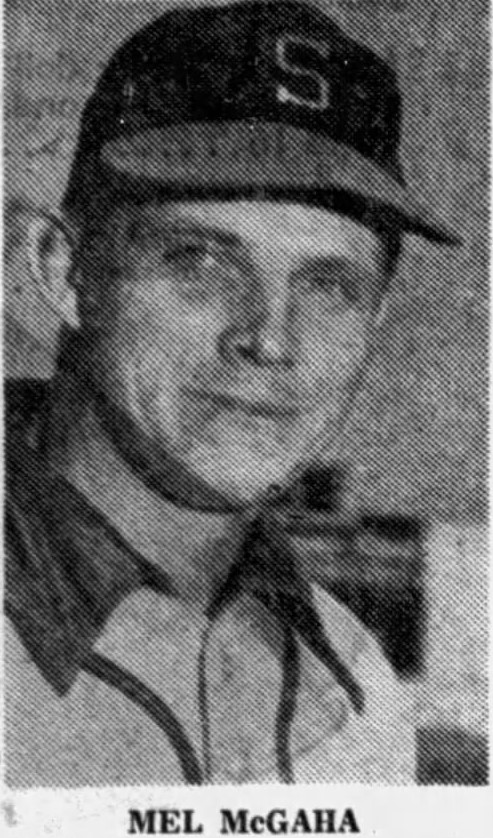
That's the old ballgame Shreveport, chapter 12 (Mel McGaha)

Chapter 12
Mel McGaha  
     
In the 1950s and '60s, there was no better ambassador for Shreveport in baseball than Fred Melvin McGaha.
Mel went from outstanding three-sport athlete at the University of Arkansas to pro baseball and basketball player, college basketball coach, minor-league player-manager and then, in the 1960s, major-league manager and coach.
And starting in 1953, for three-plus decades, a Shreveport resident with his family.
    He was a Sports' player in 1953, and the next year -- after Mickey Livingston was let go -- Sports general managing partner Bonneau Peters made Mel, at age 26, the player-manager. He stayed in that role for four seasons; the newspapers often called the Sports the "Macmen."
His first team ('54) won Shreveport’s first Texas League regular-season championship; his second won the TL playoff championship and played in the Dixie Series.
He was a teacher of the game's fundamentals -- many times in youth clinics in Shreveport and North Louisiana -- and a solid strategist, with a direct, honest and, at times, forceful personality.
"I can't say enough good things about Mel, I thought the world of him," said good friend and golfing buddy Billy Muffett in a 2002 interview. Muffett pitched for McGaha and the Sports in 1955, including a no-hitter in the playoffs, and went on to pitch in the majors and was a longtime MLB pitching coach.
"A coach or player is not going to make everyone happy," he added, "but 90 percent of the players liked Mel. You knew right where you stood with him. He pulled no punches. ... He was a no-nonsense guy, but he could get along with anyone, if they wanted to get along."
J.W. Jones was a Sports catcher through most of the 1950s and also stayed in the city as a resident, and he, too, had "high regard" for McGaha.
"Mel treated you like a man," Jones said. "Professionally, he expected good things from us, but he did not ride players. He was always willing to help you, if you needed it. ... He was just an excellent teacher, an excellent manager."
The 1956 and 1957 Sports teams did not compete for playoff spots, although the '56 team featured the Texas League home-run record breaker, Ken Guettler, with 62 homers. After the '57 season, the Shreveport franchise folded and Mel moved to the Southern Association to manage Mobile, Ala., in 1958-59.
He managed minor-league championship teams in 1959 (Mobile) and 1960 (Toronto Maple Leafs, International League), then became a major-league coach (Cleveland Indians) in 1961.
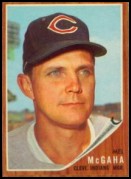
His first major-league manager's job was with Cleveland in 1962; he was fired after a 78-82 record and sixth-place finish.
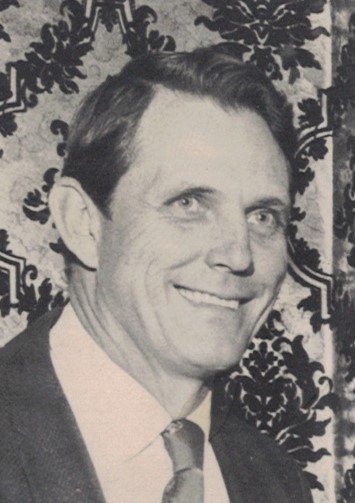
He moved on as a coach and off-season front-office aide with the Kansas City Athletics, and in the middle of the 1964 season, he was first sent to the front office by notorious team owner Charlie Finley and then quickly made the field manager of a last-place team. He was fired by Finley (no unique happening) after a 5-21 start in 1965.
His MLB managerial record: 123-173.
He then managed in the Houston Astros' system at Oklahoma City (Class AAA) in 1966 and '67, and in a Shreveport connection, became first-base coach for the 1968-69 Astros while fellow Shreveport resident and ex-Sports manager Salty Parker was the third-base coach.
A Louisiana native (born in Bastrop in 1926), McGaha grew up in Mabelvale, Ark. (Pulaski County), a town later annexed into Little Rock.
He did not play football in high school, but after starring in basketball and baseball, went out at University of Arkansas and made the team as an end. Solidly built at 6-foot-2, 198 pounds, he became a three-sport star for the Razorbacks from 1943 to 1948 (one year, 1945, he spent in military service).
He played for Arkansas in the Cotton Bowl at the end of the 1946 season -- the "blizzard" 0-0 tie with LSU -- and in the Dixie Bowl in 1947 when he ran back a pass interception 72 yards for a touchdown.
In 1970, he was inducted into the Arkansas Sports Hall of Fame.
An outfielder-catcher in high school and outfielder-first baseman at Arkansas, he signed a pro ball contract with the St. Louis Cardinals in 1948. He also stayed with basketball and in the 1948-49 season played in the pros -- NBA -- appearing in 51 games as a reserve guard with the New York Knickerbockers (averaged 3.5 points a game).
In his first pro baseball season, he was with the Duluth Dukes (Northwest League) when the team bus collided head-on with a truck, Six team members were killed and McGaha was one of 13 injured. He recovered, but the injuries -- mostly a weakened shoulder -- limited his playing ability and he never made the majors as a player.
Still, he played 11 minor-league seasons and was a versatile performer -- outfielder, first baseman, sometimes shortstop and even a pitcher. He was a dependable, often clutch, pinch-hitter.
He reached Class AAA with Columbus in 1949 and '50, then spent the bulk of his career in the Texas League (two games with Houston in '48, then full seasons with the Buffs in 1950-52 before five years with the Sports).
He was a .277 hitter in 903 regular-season minor-league games, with a best of .326 for the 1956 Sports. His Shreveport regular-season totals: 438 games, .274 average, 48 doubles, four triples, 32 home runs, 181 RBI.
At one point, he was a volunteer assistant coach with Arkansas basketball and at the start of his Shreveport career, he was head basketball coach for two seasons at Arkansas-Monticello (the Boll Weevils).
"Basketball was his first love," said son Fred -- who played baseball at Shreveport's Fair Park High and then at Louisiana Tech (where he was a conference batting champion), signed a pro contract (Cardinals' chain, 1972-73) and wound up briefly playing outfield for the '74 Shreveport Captains. He is a longtime attorney in Monroe, La.
After leaving pro ball after the 1969 season, Mel become director of SPAR (the Shreveport Parks and Recreation department) through the mid-1970s, then moved across the river to head the recreation department in Bossier City.
All the while, he remained involved in pro baseball -- with the Shreveport Braves and then the Shreveport Captains as an advisor to team officials and with public relations.
In helping then-Captains owner Ray Johnston in the early 1970s, he lobbied for a new stadium in the city. That did not materialize then, but McGaha remained connected to Shreveport's team.
"He was as supportive of me as anyone in town," said Taylor Moore, Captains' team president and operating partner for more than 20 years. "He was more helpful than most anyone knew.
"He loved the game and wanted it to be successful in Shreveport."
Fred McGaha, of course, was connected to baseball from his early days. "When we were kids," he recalled of him and his older sister, "he [Mel] was not home a lot of the year. But when school was out, we would go to where he was [managing or coaching].
"For a young kid like me, growing up in big-league locker rooms was a lot of fun. I got to know a lot of big-league players. I'd be out there shagging balls in the outfield and at times I'd be next to [Mickey] Mantle or [Roger] Maris. That was something to remember."
And Mel, the tough baseball man, was not a tough father.
"He was not overbearing, he was not overly strict," Fred recalled in 2002. "He let me make my own decisions. Some were good and some weren't. He let me know about the ones that weren't."
In the early 1980s, Mel -- remarried after his first wife Tina's death -- moved to Disney, Okla. He died Feb. 3, 2002, in Tulsa at age 75.

 
Sept. 14, 1955 -- The Shreveport Times
Kansas City Athletics manager, 1964-65